

Prepared by Ultimate Plumbing | NC License #29048 | Updated October 14, 2026
A burst pipe, failed supply line, overflowing toilet, or leaking water heater can damage a home quickly. Knowing which valve to close—and when not to approach the leak—can help limit damage while professional help is on the way.
Water flowing now?
If you can safely reach the appropriate valve without entering standing water or approaching an electrical hazard, close the nearest fixture shutoff or your home’s main water valve.
Then call Ultimate Plumbing at 704-892-5843 for emergency plumbing service.
This guide applies to pressurized household water leaks. Closing your water valve will not stop stormwater, a public water-main break, a sewer backup, or a gas leak.
Check for Immediate Hazards First
Before approaching a valve, look at the area around you.
- Water near outlets, appliances, cords, or an electrical panel: Do not enter standing water or touch electrical equipment. Turn off electricity only from a dry, safe location. Otherwise, leave the area and contact emergency services or your electric utility.
- Gas odor or hissing: Leave the building immediately. Do not operate switches, use a phone inside, or attempt to shut off an indoor valve. Call 911 and your gas utility from outside.
- Sewage backup: Stop using sinks, toilets, showers, washing machines, and dishwashers. Keep children and pets away from contaminated water and call a plumber or your water-and-sewer provider.
- Flooded private-well equipment: Stay away from the pump and electrical components. Flooded well pumps can create an electric-shock risk.
Emergency-preparedness guidance recommends learning how to shut off household utilities before an emergency. Do not wait for a burst pipe to find your valve for the first time.
Should You Close a Fixture Valve or the Main Water Valve?
Use the smallest safe shutoff that controls the leak. Close the main valve when the source is unknown, a supply pipe has burst, several fixtures are affected, or a fixture valve will not stop the water.
| Problem | First valve to use |
|---|---|
| Overflowing toilet or leaking toilet supply line | Toilet shutoff behind or beside the toilet |
| Sink faucet or supply-line leak | Hot and cold shutoffs beneath the sink |
| Washing-machine hose leak | Laundry supply valves, only if safely accessible |
| Dishwasher or refrigerator line leak | Appliance shutoff, if visible and clearly identified |
| Water-heater leak | Clearly labeled cold-water inlet only; do not guess at gas or electrical controls |
| Burst pipe, hidden leak, or unknown source | Main water shutoff |
If the local valve is stuck, badly corroded, hidden behind an appliance, or surrounded by water, do not force it or put yourself at risk. Use the main shutoff if it is safely accessible and call a plumber.
Where Is the Main Water Shutoff?
For homes on municipal water, the homeowner’s main shutoff is ordinarily on the house side of the water meter, where the service line enters the building. Common locations include:
- In a basement or crawl space near the street-facing wall
- Inside the garage
- Near the water heater or mechanical area in a slab home
- At another point where the incoming water line first enters the home
Do not assume the valve inside a meter box belongs to the homeowner. Utility-owned meter or curb-stop valves may require a special tool and authorization. If your interior valve is missing or unusable, call your water provider and a licensed plumber.
For a private-well home, the shutoff may be near the pressure tank or where the supply line enters the house. Well systems vary. Ask a professional to identify and label it before an emergency, and never approach flooded pump equipment.
Condominium, apartment, and multi-unit residents should contact the property manager because the correct valve may control more than one unit.
How to Identify and Close the Valve
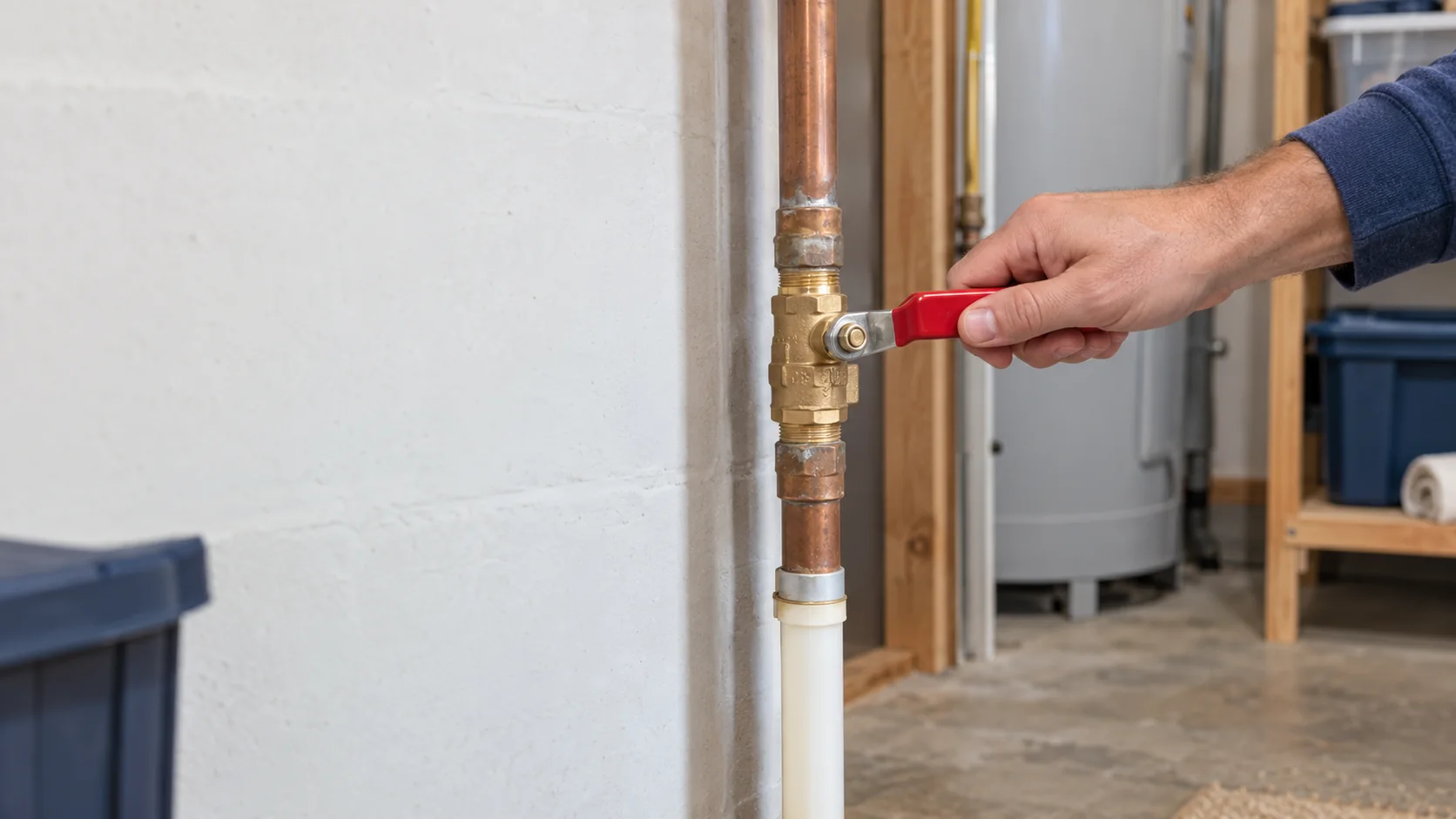
Lever-Handle Ball Valve
A ball valve has a straight lever handle.
- Open: The handle is parallel with the pipe.
- Closed: Turn the handle one-quarter turn until it is perpendicular to the pipe.
Round-Handle Gate Valve
A gate valve has a round wheel. Turn it slowly clockwise to close it, stopping when it is snug. Do not use excessive force on an old, corroded, or resistant valve.
Fixture Shutoff
Fixture stops are usually beneath sinks, behind toilets, or near appliances. Many close clockwise; quarter-turn versions rotate only 90 degrees. If the valve does not move with gentle hand pressure, stop rather than breaking the stem or supply line.
After closing a valve, open a cold-water faucet briefly in a safe area. Flow may continue for a moment as pressure and water remaining in the pipes drain. If strong flow continues, the selected valve may not be fully closed or may not control the leaking line.
What to Do After the Water Is Off
- Call Ultimate Plumbing at 704-892-5843 and explain where the leak is, which valve you closed, and whether electricity, sewage, or a water heater is involved.
- Do not use affected fixtures or appliances.
- Move belongings only when the area is safe to enter.
- Use towels or containers for minor remaining water, but do not enter standing water near electricity.
- Photograph visible damage for your records.
- Do not reopen the valve until the damaged plumbing has been evaluated or repaired.
For hidden leaks, unexplained meter movement, or recurring moisture, schedule professional water-leak detection. A failed or burst pipe may require pipe repair.
When service is ready to be restored, reopen the valve slowly and inspect the repair area. Water heaters and other appliances may require model-specific restart procedures. Follow the manufacturer’s instructions or allow a qualified professional to restore them.
Print This Before You Need It
Keep our one-page emergency checklist near your main valve, utility panel, or family emergency supplies.
Local Water and Sewer Emergency Contacts
For a leak inside the home or on the private side of the service line, call Ultimate Plumbing. For a suspected public main break, neighborhood-wide loss of pressure, or public sewer problem, confirm the provider shown on your utility bill and contact it directly.
- Ultimate Plumbing emergency service: 704-892-5843
- Town of Mooresville Water & Sewer Maintenance: 704-663-7282; after-hours emergencies 704-664-3311
- Iredell Water Corporation: 704-876-0672; after-hours emergency 704-876-0673
- Charlotte Water: 311 or 704-336-7600, 24 hours a day
Prepare Before the Next Leak
- Locate and photograph the main shutoff.
- Label it clearly without blocking access.
- Show every responsible adult in the home where it is.
- Save your plumber and utility-provider numbers in your phone.
- Ask a plumber to evaluate an old, inaccessible, or corroded shutoff before it fails.
- Consider a monitored leak detector or automatic shutoff for additional protection.
- Keep the path to the valve clear.
If you cannot locate your valve, Ultimate Plumbing can identify it, evaluate its condition, and discuss replacing an unreliable shutoff. Schedule plumbing service before an emergency—or call 704-892-5843 if water is already escaping.
Frequently Asked Questions
Which direction turns off a main water valve?
A lever-style ball valve closes with a quarter-turn until the handle is perpendicular to the pipe. A round gate valve usually closes clockwise. Stop if the valve resists gentle hand pressure.
Can I shut water off at the meter?
Do not operate a meter or curb-stop valve unless your water provider authorizes it. Utilities may own that equipment, and forcing it can damage the service. Use the homeowner’s valve on the house side of the meter or call the utility.
What if the main shutoff is stuck?
Do not use a wrench, hammer, or excessive force. An old valve can break and make the leak worse. Call a plumber and, if necessary, the water provider.
Will shutting off the water stop a sewer backup?
No. Stop using all plumbing fixtures and appliances, stay away from contaminated water, and call a plumber or the appropriate sewer provider.
Where is the shutoff in a private-well home?
It is often near the pressure tank or where the supply enters the home, but systems vary. Have a plumber or well professional identify it. Stay away from any pump or electrical equipment that has flooded.
Should I shut off my water heater too?
There is no universal procedure for every gas, electric, tank, and tankless model. If the heater is leaking or the whole-home water supply will remain off, follow its manufacturer’s emergency instructions or call a professional. Never guess at gas or electrical controls.
Safety and Utility Sources
- Charlotte Water: household plumbing fixes and troubleshooting
- Charlotte Water: public and private service-line responsibility
- CDC: electrical safety after a disaster
- Ready.gov: flood safety and preparation
- EPA: protecting private well water
This guide provides general emergency-preparedness information. Plumbing systems, utility ownership boundaries, and manufacturer procedures vary. If conditions are unsafe or you are unsure which control to use, leave the area and contact the appropriate emergency service, utility, or licensed professional.
Related Plumbing Services
Need help now? Call 704-892-5843 for fast, reliable service.